Six centuries after Jan van Eyck painted the faces of merchants and relatives with an almost unsettling clarity, London’s National Gallery is preparing to bring his surviving portraits together in one room. The exhibition, Van Eyck: The Portraits, opens November 21 and runs through April 11, 2027.
It is a rare gathering for an artist whose reputation rests on a remarkably small body of surviving work. The Gallery says nine painted portraits will be joined by his only surviving drawing, Portrait of an Elderly Man, on loan from Dresden. Together, they offer a chance to look beyond the familiar story of a technical genius and consider a more interesting question: whose faces were worth preserving?
Van Eyck worked in the fifteenth-century Burgundian Netherlands, when portraiture was no longer exclusively the province of rulers and hereditary elites. His sitters included prosperous merchants, craftsmen and people in his own circle. Their status mattered, but so did the way he rendered them: wrinkles, tired eyes, uneven skin and the particular set of a mouth became worthy of sustained attention.
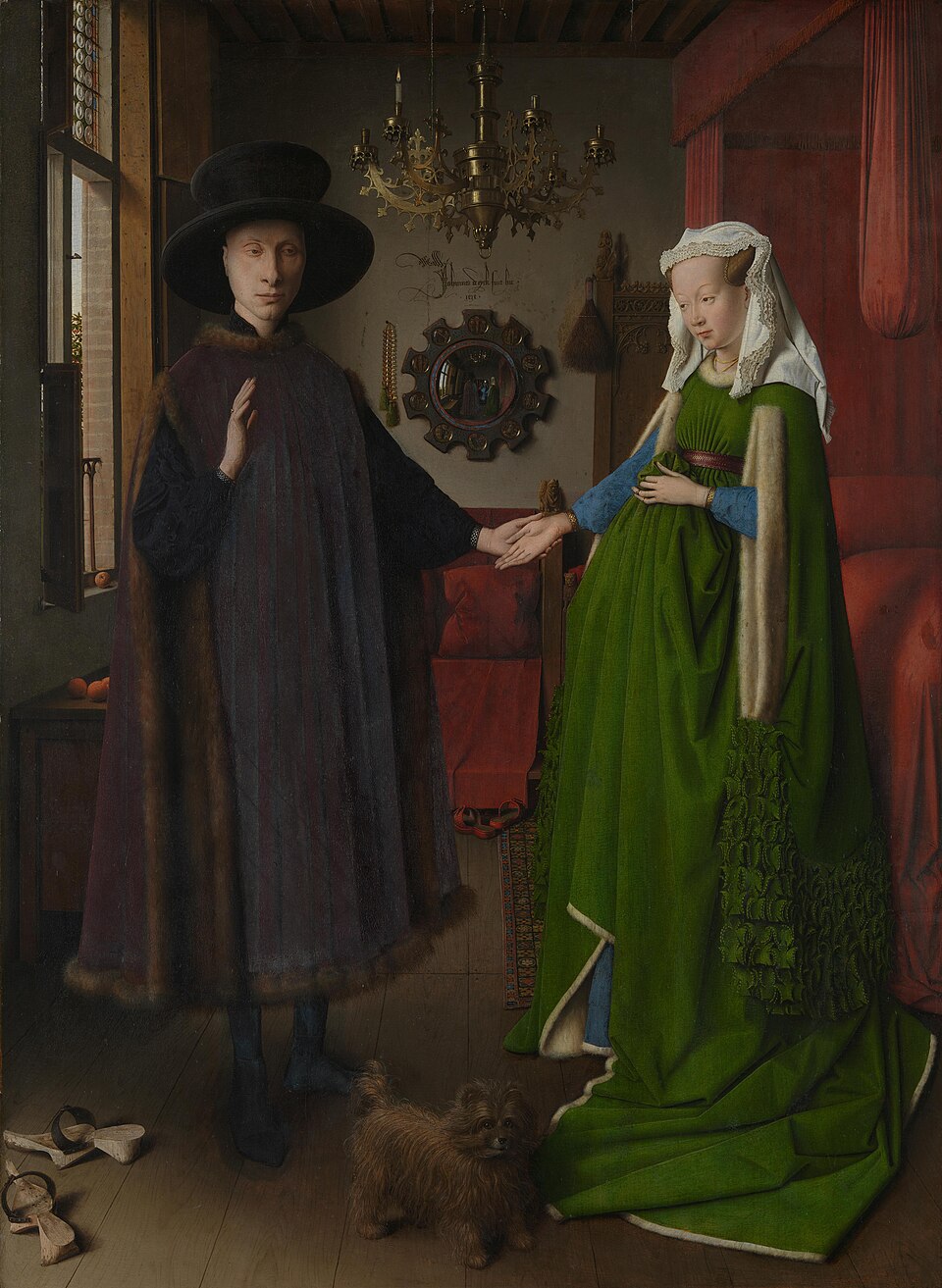
The National Gallery’s Arnolfini Portrait of 1434 is perhaps the most famous example of that intense looking. Its polished domestic interior, tiny reflected figures and carefully arranged objects have inspired generations of speculation. Yet the exhibition promises something different from another decoding of the painting’s symbols: the opportunity to compare van Eyck’s treatment of individuals directly, without relying on reproductions scattered across books and screens.
One especially revealing pairing will place the Arnolfini Portrait alongside a later panel believed to depict the same man, borrowed from Berlin. Another will bring the Gallery’s Portrait of a Man (Self Portrait?), dated 1433, into proximity with the 1439 portrait of Margaret, the artist’s wife, from Bruges. The uncertain question mark in the former title is a useful reminder that even these apparently intimate images leave much unknown.
There is also the matter of technique. Van Eyck’s command of oil paint allowed extraordinary transitions between light, flesh, fabric and reflective surfaces. But virtuosity alone does not explain why these faces remain so arresting. Their power lies partly in their refusal to become generic examples of wealth or piety. They appear specific, vulnerable and stubbornly present.
Exhibitions often promise to rewrite art history. This one has a quieter, more persuasive claim: a reunion of works that may never be assembled again. For visitors, the real event may be discovering how much personality can survive across six hundred years—and how little certainty survives with it.
Image: Jan van Eyck, The Arnolfini Portrait (1434), National Gallery, London. Photographic reproduction: National Gallery Photographic Department, via Wikimedia Commons; public-domain artwork/reproduction. This is an artwork image, not an installation photograph.
Sources: National Gallery exhibition details; National Gallery updated exhibition announcement.



Leave a Reply