At the center of the Museum of Modern Art’s new Constantin Brancusi exhibition is a room that is not quite a room. Framing and gauze suggest the sculptor’s Paris workshop, creating what the museum’s designers call a “ghost studio.” It is an unusually apt way to introduce an artist who considered the space around a sculpture almost as important as the sculpture itself.
Brancusi: The Artist and His Studio opened in New York on October 25 and runs through February 27, 2027. Filling MoMA’s sixth floor, it brings rarely lent works from the Centre Pompidou’s Atelier Brancusi together with the museum’s own collection, plus photographs, films, furniture, tools and archival material. The timing is exceptional: renovation in Paris has temporarily closed the original studio display, allowing objects that seldom travel to be seen together elsewhere.
From 1916 until his death in 1957, Brancusi used his workspace at impasse Ronsin as a workshop, home and informal exhibition room. After 1920 he increasingly preferred inviting people there to showing his sculpture in conventional French exhibitions. Visitors encountered not isolated masterpieces on anonymous plinths, but carefully orchestrated relationships between polished bronze, rough stone, carved wood and light.
MoMA’s exhibition designers explain that the gauze installation follows the layout of his later studio at 11 impasse Ronsin without pretending to be the original. One of Brancusi’s sculpted wooden doorframes occupies its historical position. Elsewhere, a densely arranged tool wall brings the physical work back into view: chisels, rasps, saws and implements the artist made himself. These are not incidental props. They expose the effort behind forms that can appear almost weightless.
The sculptures make that contradiction tangible. Works including Leda, Bird in Space and Fish pursue extraordinary simplicity, yet their surfaces and supports were the result of prolonged decisions. Different versions of Mlle Pogany and The Kiss show Brancusi returning to a motif rather than treating one object as its definitive conclusion. A base could be a sculpture in its own right; a rearrangement could change the entire encounter.
He also became a photographer of his own work, dissatisfied with how other cameras represented it. His images record a studio in constant revision, making the case that presentation was not an afterthought but another medium. The exhibition’s films add movement to a reputation often reduced to serene, static objects.
There was a human education here, too. In MoMA’s accompanying audio, recollections by former apprentice Isamu Noguchi describe marble dust, demanding toolwork and Brancusi’s insistence on concentration. The workshop was neither a spotless shrine nor a purely private refuge.
That may be the show’s most persuasive idea. Instead of removing the art from the circumstances of its making, MoMA asks visitors to imagine the studio as an evolving composition. The “ghost” is not a replacement for Paris. It is a reminder that Brancusi’s finished objects were only part of what he created.
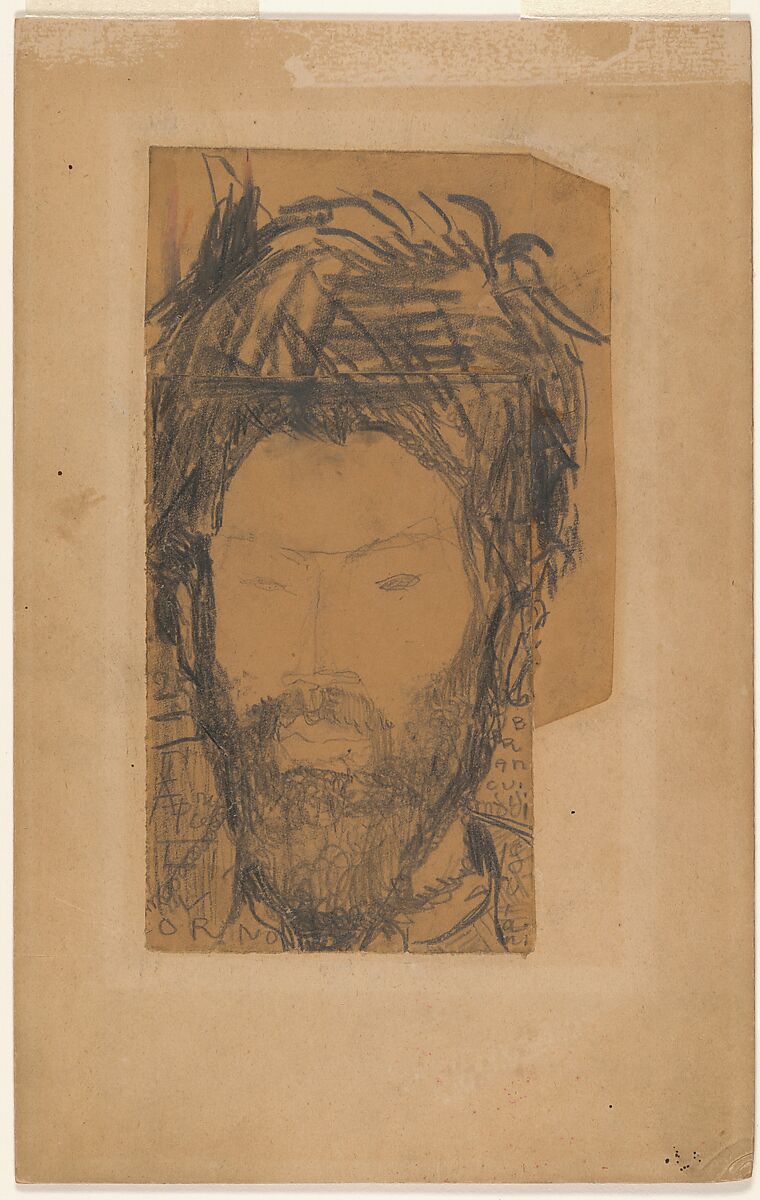
Image: Amedeo Modigliani, Constantin Brancusi, 1909, graphite and crayon on paper. The Metropolitan Museum of Art, Gift of the Constance B. and Carroll L. Cartwright Collection, 2025 (2025.236.5). The Met Open Access, public domain / CC0. Historical portrait, not an exhibition installation view and not identified as a work in the MoMA show.


Leave a Reply