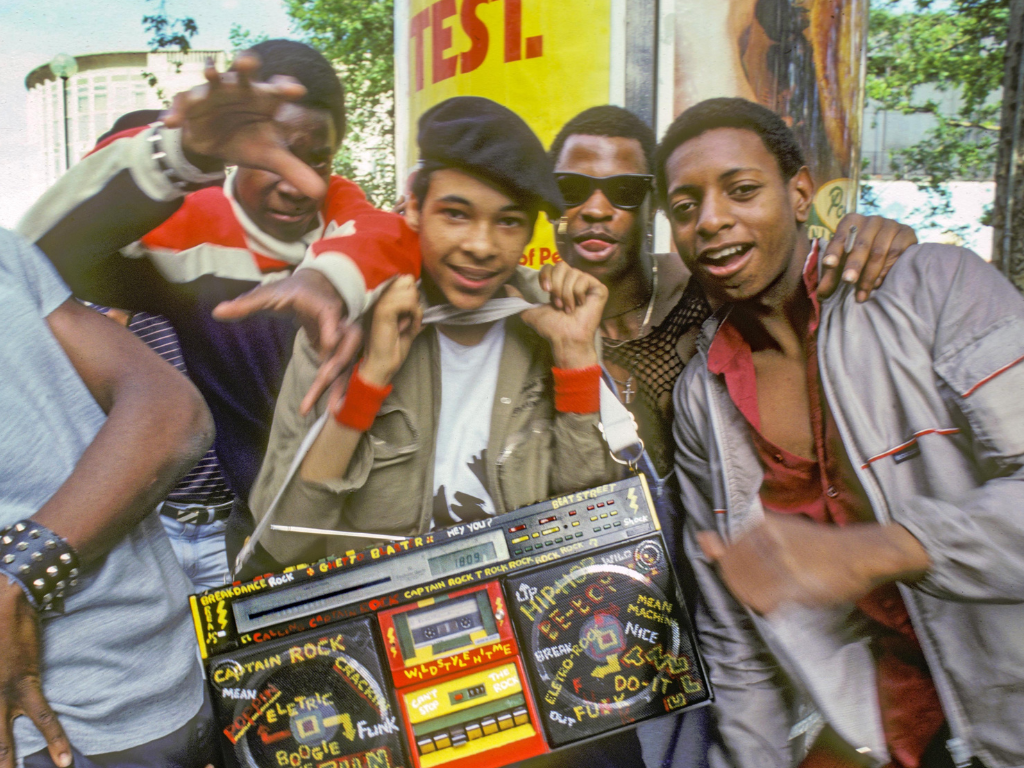
Opening at Saatchi Gallery in November, the exhibition brings the visual worlds of punk, hip-hop, graffiti and protest together—and raises an intriguing question about what happens when underground culture enters the museum.
Long before certain forms of street culture found their way into galleries, collectors’ homes or expensive coffee-table books, they existed because people wanted to make something visible.
Sometimes that meant a name written on a train. Sometimes it was a punk flyer photocopied at work, a slogan printed on a T-shirt, or a record sleeve designed to look nothing like the established music industry expected. Different scenes developed their own visual languages, often with little money and no invitation from the institutions that would later celebrate them.
That history is at the center of Beyond the Streets, returning to London’s Saatchi Gallery from November 11, 2026, through May 5, 2027, with a new exhibition spanning more than ten rooms and featuring work from more than 100 international artists and contributors.
Rather than treating graffiti, punk, hip-hop and street fashion as separate stories, the exhibition examines the ideas and exchanges that connected them.
More Than Graffiti
The show is curated under the direction of Beyond the Streets founder Roger Gastman and follows the project’s successful 2023 London presentation. The new edition mixes historical archives with contemporary work, large-scale installations, photography and material created specifically for this exhibition.
Among the announced contributors are graffiti pioneers LADY PINK, FUTURA 2000 and ZEPHYR; artists including KAWS and Kenny Scharf; musician and artist Goldie; and feminist art collective the Guerrilla Girls.
The scale is ambitious, but the most interesting part may be the exhibition’s willingness to place objects from everyday underground life alongside recognizable names from contemporary art.
A display devoted to Hip-Hop Connection magazine, an archive of flyers and posters, and material on the history of spray paint all offer different ways of thinking about authorship. Cultural history isn’t made only by the individuals whose signatures end up on gallery walls.
The Visual Language of 2Tone
For readers interested in music history, one of the exhibition’s most promising sections is a dedicated room on 2Tone.
The movement emerged from late-1970s Britain with ska, punk, reggae and a pointedly multiracial identity at its center. Bands associated with the scene helped turn visual design into a cultural statement. Black-and-white graphics, sharply dressed figures and a recognizable aesthetic allowed records, posters and clothing to communicate something before a single note was played.
The exhibition will examine iconic 2Tone imagery, including Walt Jabsco and Beat Girl, alongside photography by Janette Beckman. It is a reminder that independent music scenes are remembered visually as well as sonically.
The same is true of punk’s collages, homemade badges, graffiti lettering and political posters. These weren’t simply decorative additions to a movement. In many cases they were the most direct way of making its ideas public.
When Protest Becomes an Exhibit
The exhibition also foregrounds visual activism, including material from the See Red Women’s Workshop, the London collective whose screen-printed posters helped document and energize the women’s liberation movement from the 1970s onward.
Other announced works include photography by Neil Kenlock, a film from Pussy Riot co-founder Nadya Tolokonnikova and work by Shepard Fairey.
There is an unavoidable tension in bringing such material into a prestigious gallery. Graffiti could be erased as vandalism, while protest posters were made to function in the streets, not behind glass. Once those objects become museum pieces, the context of their creation can change.
But preserving them also matters. The homemade, temporary and often undocumented aspects of underground culture are among the easiest things to lose. A flyer thrown away after a gig or a mural painted over can take an entire small piece of history with it.
The challenge for a show such as Beyond the Streets is to preserve the energy and arguments behind the work rather than merely presenting its surface as style.
A History Still Being Written
The 2026 exhibition promises a reconstructed section of a New York subway train, a room exploring 2Tone fashion and history, and a broad range of photography and archives connecting visual art to music and activism.
Its subject is not one artistic movement but a recurring impulse: to create something without waiting for permission, and to make that creation part of public life.
In a cultural climate where yesterday’s underground experiments can become tomorrow’s museum acquisitions, that impulse is worth remembering. The art world may eventually recognize the work, but it rarely creates the conditions that made it necessary.
Beyond the Streets opens at Saatchi Gallery, London, on November 11, 2026, and runs through May 5, 2027. Visit the official exhibition announcement for further details.
Featured photograph: Martha Cooper, Kids on the way to the Beat Street premiere in London, 1984, © Martha Cooper. Image supplied with the Saatchi Gallery exhibition announcement. The photograph predates the 2026 exhibition.

Leave a Reply