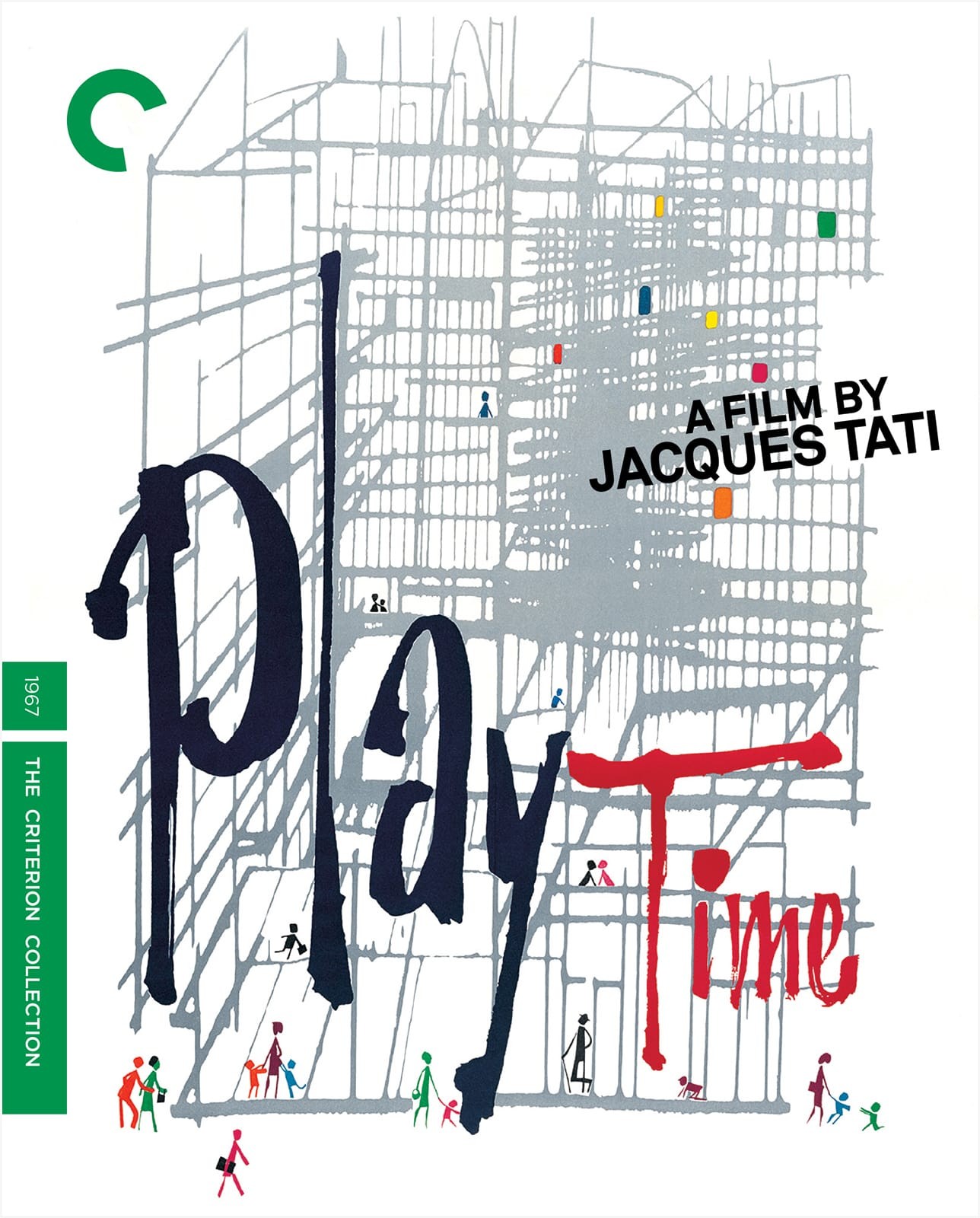
The glass doors, office partitions and immaculate surfaces of Jacques Tati’s Playtime promise a world in which everything has been made more efficient. The joke is that nobody seems quite sure how to live in it. Nearly six decades after its release, the film’s bewildering architecture feels less like a period curiosity than an environment we have learned to inhabit.
This November, Studiocanal Classics is revisiting Tati’s work through a 4K home entertainment collection. The project follows summer screenings in France and a restoration effort involving Studiocanal and Les Films de Mon Oncle, with support from the CNC, detailed in Carlotta Films’ retrospective announcement.
Restoring Tati presents an unusually persuasive argument for high-resolution cinema. In many films, the composition tells us exactly where to look. Tati’s frames invite our attention to wander. A small action at the edge of the image can be as important as the figure in the foreground, and a seemingly incidental sound can turn an ordinary object into the source of a joke.
Monsieur Hulot, the awkward figure recognizable by his hat and distinctive gait, is not a conventional comic hero. In Mon Oncle, his encounters with the mechanisms of an ostentatiously modern house expose the absurdity of domestic convenience. In Playtime, he becomes one participant among many moving through a city of steel, glass and interchangeable interiors. The viewer is free to discover comedy that Hulot himself may not even notice.
That freedom is particularly interesting in an era of small screens and aggressively edited video. Modern screen comedy frequently depends on close-ups, reaction shots and a tightly controlled rhythm. Tati gives us something closer to the experience of watching a busy street. Different spectators can notice different things, and a second viewing can reveal an almost entirely different set of jokes.
An earlier American 4K edition of Playtime was examined in detail this February by Criterion Forum, whose technical review emphasizes the film’s dense compositions and the visibility of fine detail. That edition uses an earlier restoration, rather than necessarily the same materials as the new European collection. The distinction matters to collectors, but both releases underline the importance of preserving the whole image.
Tati’s films are not simply arguments against technology. Their comedy depends on the ingenuity with which people negotiate the environments they have built. A room designed for one purpose can become a place for something entirely different. A system fails, and human beings improvise. For all the precision of his filmmaking, that capacity for disorder is the source of its pleasure.


Leave a Reply