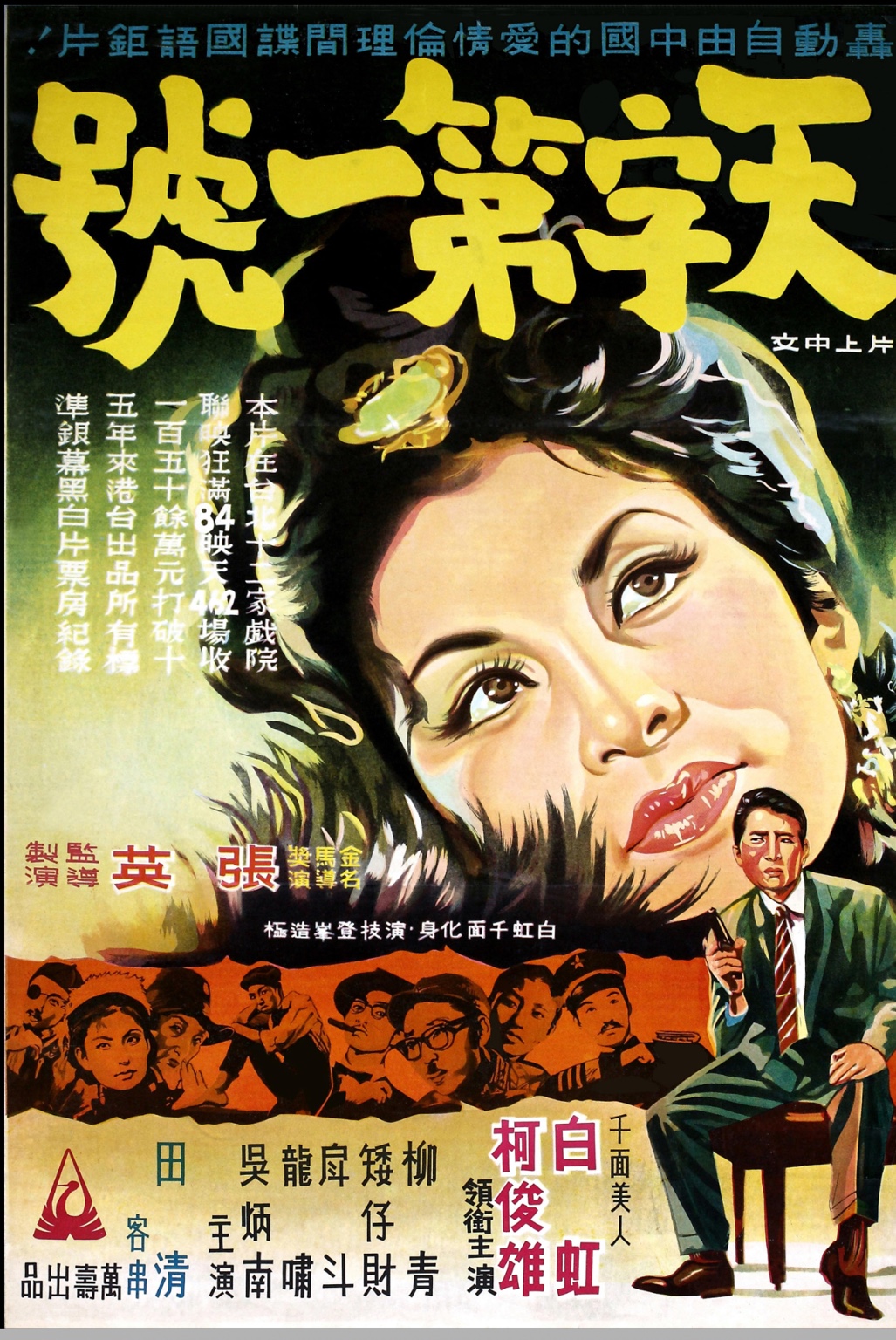
While Sean Connery was establishing James Bond as the international face of espionage cinema, Taiwanese audiences were embracing a rather different kind of secret agent. In Zhang Ying’s 1964 thriller The Best Secret Agent, actress Bai Hong occupies the center of a story in which romance, divided loyalties and resistance to Japanese occupation are as important as the mechanics of spying. The film helped launch a remarkable cycle of Taiwanese-language espionage pictures, many of which have since disappeared.
New York’s Metrograph is revisiting that world this Thanksgiving weekend with Taiyupian Spy Games, a five-film program presented in restored versions supplied by the Taiwan Film and Audiovisual Institute. Opening on November 27 with The Best Secret Agent, the series also includes Lin Tuan-chiu’s murder mystery Six Suspects and three enormously intriguing 1968 adventures: Dragon Superman, Moonlight Superman and Skyfly Superman.
Taiyupian refers to cinema made in Taiwanese Hokkien. Beginning in the mid-1950s, filmmakers built a commercial industry around audiences who wanted entertainment in their own language. Its output encompassed everything from domestic melodrama to crime pictures and fantastical adventures. International influences were plentiful, but these films were also responding to a particular history and local audience.
In The Best Secret Agent, according to the national film archive’s synopsis, refugees fleeing Japanese forces become entangled in a romantic triangle involving a collaborator. A resistance agent threatens his position, while an old love affair complicates the loyalties of everyone involved. The domestic relationships are not a diversion from the espionage plot; they are what gives it its stakes.
Film scholar Huang YenHsuan’s study published in May 2026 identifies more than forty Taiwanese-language spy films produced within four years and five sequels to Zhang’s hit. Their emphasis on resourceful female protagonists distinguishes them from the masculine fantasy associated with Bond. Here, the assumptions men make about women can themselves become a weakness to exploit.
The survival of Zhang’s film was far from guaranteed. A 2019 Taipei Times report described the poor condition of both surviving copies, one suffering from exposure problems and the other from extensive physical deterioration. It also documented how discarded film stock from the declining industry was repurposed into everyday objects. Only a fraction of the original Taiwanese-language productions survives.
That makes this weekend’s program more than a collection of enjoyable genre curiosities. It restores a measure of visibility to a popular cinema whose ambitions were once evident in local box-office receipts but whose achievements are difficult to reconstruct today. For anyone who loves the inventiveness of low-budget sixties filmmaking, Taiwan offers a whole other tradition to explore. The five-film program runs through November 29.


Leave a Reply