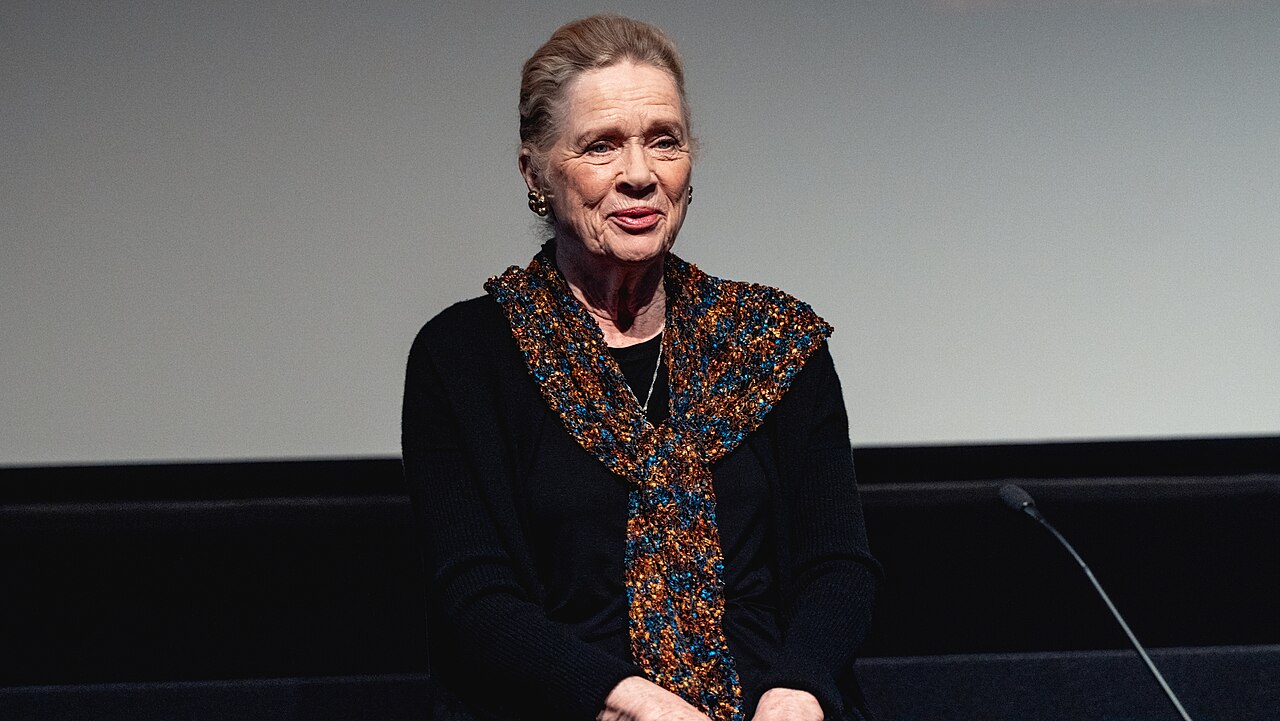
Twenty-six years after its premiere, Faithless arrives on BFI Player on November 9, offering another chance to revisit one of the most bruising collaborations between Ingmar Bergman and Liv Ullmann. Yet the most revealing fact about this 2000 drama is not simply that Bergman wrote it. It is that Ullmann directed it.
The distinction matters. Ullmann had long been associated with Bergman as an actor, notably in films that probed the shifting power between intimacy and performance. Here she takes charge of a screenplay that draws loosely on his own experiences, shaping its confession into something more complicated than a celebrated filmmaker’s reckoning with his past.
Erland Josephson plays an aging director named Bergman, who imagines an actress, Marianne, into being. Played by Lena Endre, Marianne recounts an affair with David, a theatre director and friend of her husband Markus. The consequences spread beyond the lovers, most painfully into the life of a child. The storytelling device makes memory itself suspect: the man apparently controlling the narrative is also implicated in its emotional damage.
That is where Ullmann’s direction becomes essential. The film does not need to excuse the person doing the remembering. Nor does it reduce Marianne to an illustration of somebody else’s guilt. The tension between a male writer’s autobiographical material and a woman filmmaker’s interpretation gives Faithless its unusual force. Authorship becomes part of the drama rather than merely a credit.
At 154 minutes, the film asks viewers to stay with embarrassment, jealousy and consequences long after the initial excitement of betrayal has evaporated. Its deliberate pace feels especially challenging in an era when screen stories often rush toward a moral verdict. Ullmann instead allows competing versions of hurt to remain uncomfortable.
The BFI’s November programme places Faithless alongside restorations of early cinema and other discoveries, an apt reminder that film history is not only a sequence of famous directors. It is also a history of collaborations in which the person behind the camera can radically change the meaning of a familiar voice.
Available to BFI Player subscribers from November 9 in the UK, Faithless is less a footnote to Bergman than an argument for looking closely at Ullmann’s own filmmaking. Its return invites a different question from who committed the betrayal: who gets to tell the story afterward?
Sources: BFI November programme; BFI Player film listing; Criterion Channel film notes.



Leave a Reply