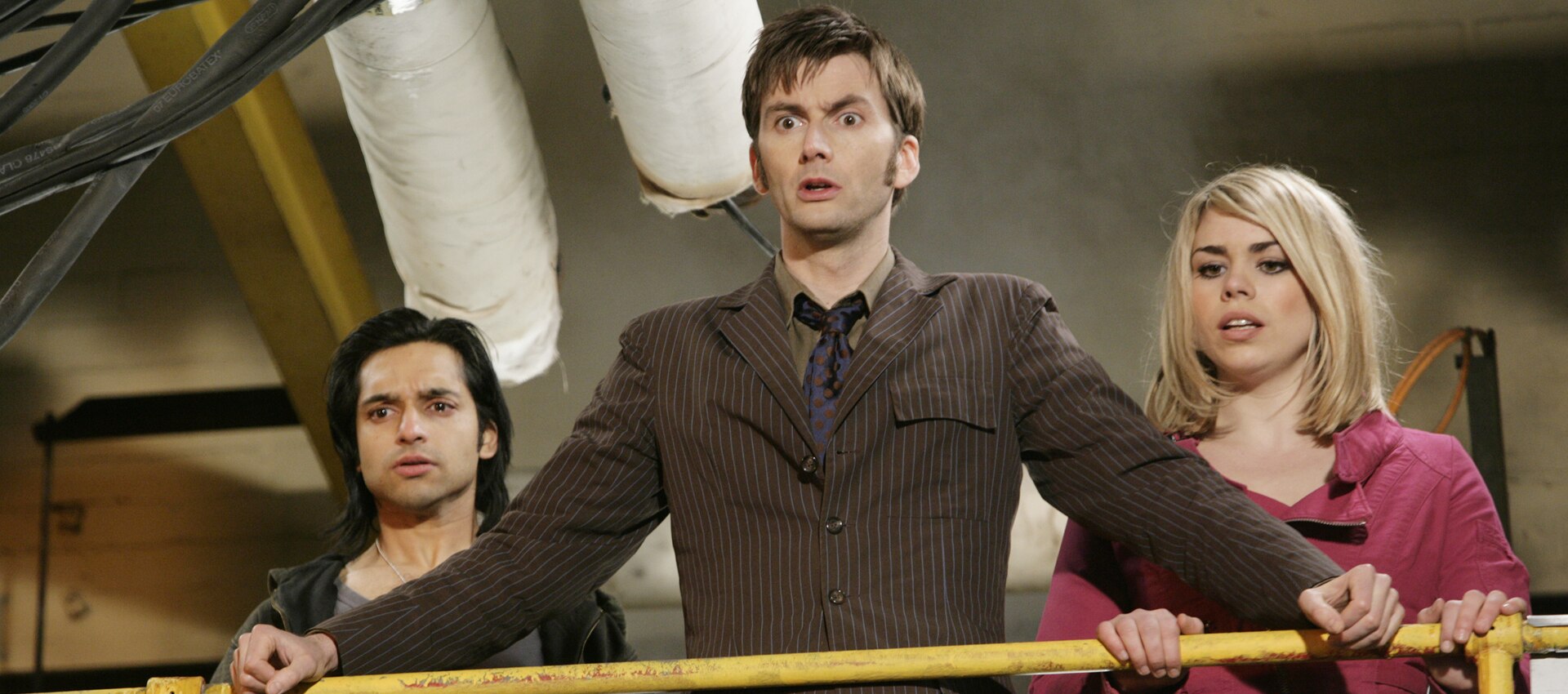
Twenty years after its original television broadcast, one of Doctor Who’s most unsettling adventures is getting a second night at the cinema. On October 22, BBC Studios, CinemaLive and Fathom Entertainment announced encore screenings of The Satan Pit Extended Cut for Saturday, November 28, 2026, following advance sell-outs for the planned Doctor Who Day screenings on Monday, November 23.
The extra date covers selected cinemas in the United Kingdom, Ireland, United States, Canada, Australia and New Zealand. In Britain, Cineworld has also scheduled 4DX presentations at all 34 of its UK cinemas on both dates. It is an unusually tangible measure of enthusiasm for a story audiences could already watch at home.
Originally broadcast in 2006 as The Impossible Planet and The Satan Pit, the adventure has been re-edited into a single movie-length presentation. Scenes previously available only as DVD extras have been restored to the narrative, alongside previously unseen extended footage. An interview with director James Strong is included. This is not a new production masquerading as an anniversary event: the change is in the cut, the scale and the setting in which people experience it.
David Tennant’s Doctor and Billie Piper’s Rose arrive at Sanctuary Base 6, an industrial outpost on a planet orbiting a black hole. The crew are facing something ancient beneath the surface; the Ood, introduced in this story, become part of a nightmare that moves between claustrophobic science fiction and supernatural horror. Its central questions about fear and belief are stranger than a routine monster-of-the-week adventure.
What makes the cinema experiment interesting is how deliberately physical the original story feels. In an official twentieth-anniversary retrospective published October 7, costume designer Louise Page described the base crew’s clothes as practical workwear, while prosthetics designer Neill Gorton discussed the unexpectedly sympathetic design of the Ood. Those details help explain why its grimy, lived-in world still carries weight.
There is a broader reversal here, too. In an era when television is built for individual, on-demand viewing, this release turns a serial into a shared, time-specific occasion. The additional screenings suggest that the attraction is not only missing footage. It is also the chance to hear a room react together to a story about people stranded far from everyone else.
November 23 marks the anniversary of Doctor Who’s first broadcast in 1963. The official event announcement and Fathom’s updated notice provide screening information; availability varies by cinema.
Photo: © BBC Studios. Official Doctor Who publicity still, reproduced for editorial coverage of the theatrical event.



Leave a Reply