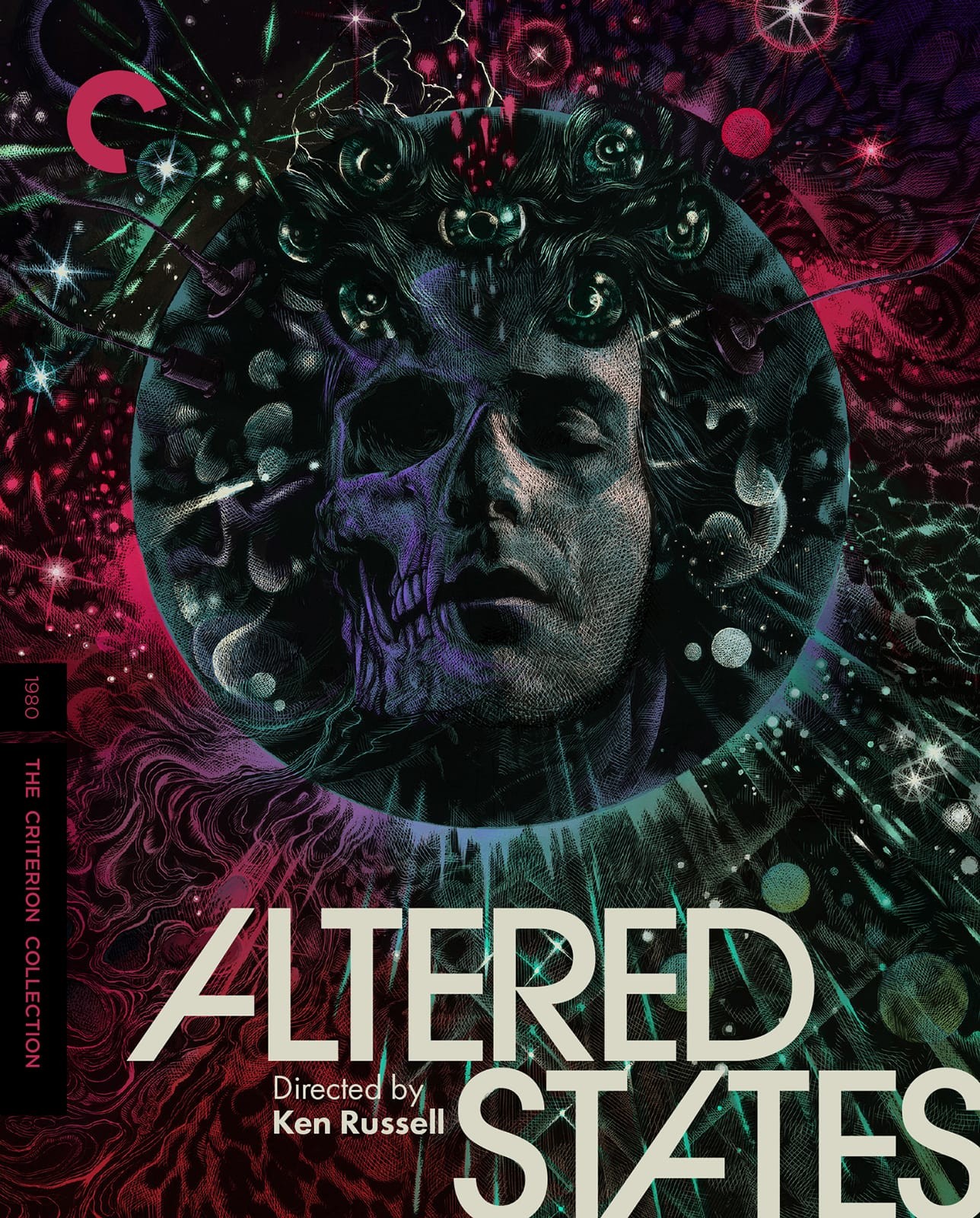
Some science-fiction films ask what lies beyond human understanding. Ken Russell’s Altered States (1980) seems determined to drag viewers there. A collision of metaphysics, body horror and hallucinatory spectacle, it remains one of the strangest experiments to emerge from mainstream American cinema.
William Hurt plays Eddie Jessup, a scientist exploring altered consciousness through sensory-deprivation experiments and psychoactive substances. What begins as research becomes an obsession that challenges the limits of identity, evolution and the human body itself. The Criterion Channel has included the film in its October 2026 programming, with supplemental features including a commentary by film historian Samm Deighan and interviews with Russell and Hurt.
A Director Who Refused Restraint
Russell was never a filmmaker inclined toward understatement. Across music biographies, literary adaptations and films of religious and sexual conflict, he turned inward struggles into confrontational images. In Altered States, that visual excess becomes the ideal language for a story about a mind pushing beyond its ordinary boundaries.
The movie begins with an almost familiar premise: an intellectually brilliant researcher who will not accept the limits of his discipline. But its visual world quickly slips away from laboratory realism. Russell’s eruptions of color, transformation and nightmare imagery make scientific speculation feel like an assault on the senses.
The Terror of Becoming Something Else
Unlike a conventional monster movie, Altered States locates much of its horror inside the protagonist. What if consciousness is not simply something the body produces, but a route toward an older, more primitive state of being? Russell refuses to keep that question abstract. The effects and transformations turn philosophical anxiety into something tangible and grotesque.
There are moments when the film seems closer to experimental art than to a conventional commercial thriller. Its tonal extremes can be bewildering, but they are part of what makes the movie difficult to forget. It is serious and absurd, frightening and exhilarating, sometimes within the same sequence.
Why It Still Matters
The film belongs to a period when ambitious genre projects could sometimes smuggle radical images and ideas into studio releases. It is hard to imagine a comparable contemporary production that would preserve quite so much of Russell’s singular temperament.
Criterion’s renewed attention offers an invitation not just to revisit a cult title but to consider the value of films that risk failure by attempting too much. Altered States is untidy, demanding and ferociously imaginative. Forty-six years on, those qualities remain its greatest strengths.
Further information: The Criterion Channel’s October lineup.



Leave a Reply