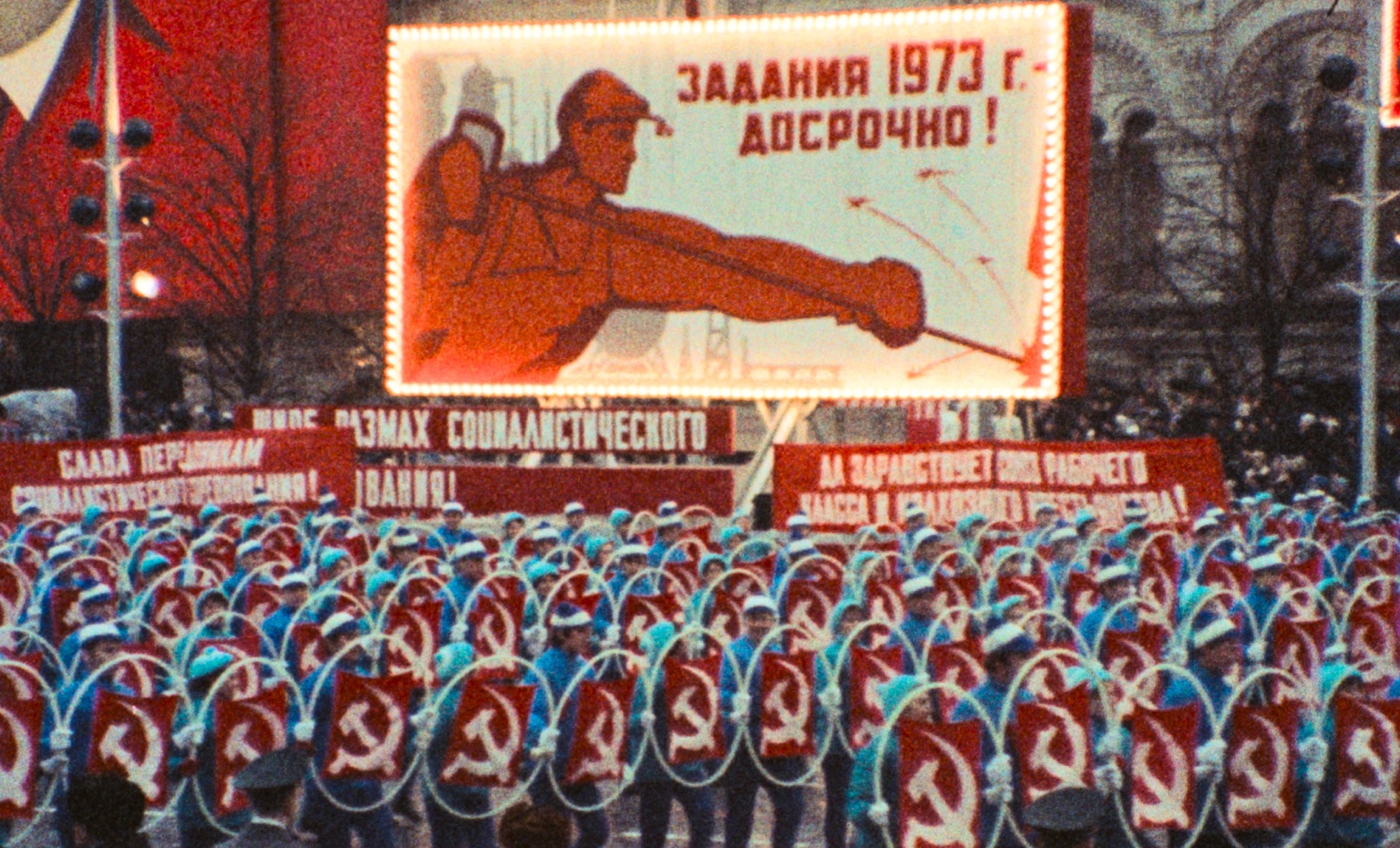
A film made from images intended to show a country holding together has just won a prize for revealing how many different worlds that country contained. On October 18, Sergei Loznitsa’s Imperium received the Best Film Award at the 70th BFI London Film Festival. The distinction is timely not only because of the film’s subject, but because it asks an uncomfortable question: who gets to decide what archival footage means?
Loznitsa assembled Imperium from material shot by Italian filmmakers travelling across the Soviet Union between 1970 and 1973. According to the director’s official film notes, the documentary moves from Moscow toward distant communities, using neither voice-over nor commentary. Its method is unusually direct: instead of telling viewers what to think, it lets the camera’s record of daily life expose the distance between an empire’s promise of unity and the variety of people living within it.
That distinction matters. An archive can look like neutral evidence, but someone chose where to point the lens, what to preserve and how to present the result. The original cameramen recorded a Soviet world for one historical moment; Loznitsa has rearranged their footage for another. The act of editing does not make the material less authentic. It makes visible how the same pictures can outlive the political story they were originally meant to serve.
The BFI’s October 18 announcement places Imperium alongside three other competition winners: Sompot Chidgasornpongse’s 9 Temples to Heaven took the first-feature Sutherland Award, Asmahan Bkerat’s Concrete Land won the documentary Grierson Award, and Rahul Roye’s Aman received the short-film prize. Together, the selections suggest a festival more interested in complicated identities and overlooked perspectives than easy consensus.
Imperium is also an intriguing winner because it refuses the usual machinery of a historical explainer. There are no contemporary interviews in the director’s description, no reassuring narrator joining the dots. The images carry the argument, but the audience still has to do the work of looking. That can be more demanding than a documentary built around a definitive thesis, and potentially more rewarding.
For American viewers, the film’s next confirmed stop is close: MoMA lists its North American premiere for October 23, with Loznitsa scheduled to introduce the screening. The museum credits the production companies and the Audiovisual Archive of the Labour and Democratic Movement (AAMOD) for the footage. The film runs approximately 176 minutes, according to the Filmitalia production listing.
The BFI award is not proof that Imperium settles the history it examines. Its achievement, at least as the project is described, is more provocative: taking images from a vanished state and making room for the people who never fitted neatly into that state’s official portrait. Sometimes the most revealing new cinema begins with the question of what we thought we were seeing the first time.
Image credit for accompanying film still: Imperium (2026), from the director’s official website. Production courtesy Essential Filmproduktion, Kino Produzioni, Société Parisienne de Production and Studio Uljana Kim; archival footage courtesy AAMOD. Original still photographer not identified. Used only to illustrate this specific news report.


Leave a Reply