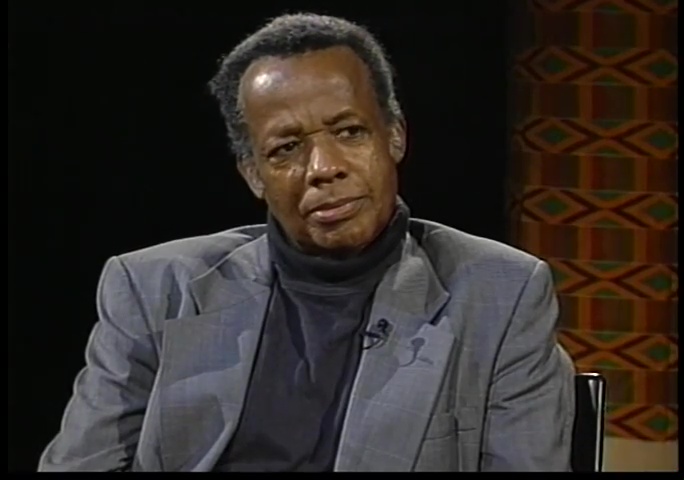
One evening in 1972, filmmaker William Greaves brought together people who had helped change American culture half a century earlier. He assembled writers, painters, musicians, actors and intellectuals associated with the Harlem Renaissance in Duke Ellington’s New York townhouse, set up cameras and let the conversation unfold. More than fifty years later, audiences are finally getting to see what happened.
The resulting documentary, Once Upon a Time in Harlem, opens in select U.S. theaters October 16 through NEON. It is a remarkable proposition for a new film release: not a reconstruction of history, but history told by people who were actually there.

Among the participants captured in Greaves’s 16mm footage are painter Aaron Douglas, poet and novelist Arna Bontemps, photographer James Van Der Zee, artist Richard Bruce Nugent and pianist Eubie Blake. These were not simply important names on a museum wall. They were people with memories, relationships and differing ideas about the extraordinary cultural movement they had helped build.
That distinction is what makes the project so intriguing. We tend to encounter the Harlem Renaissance as a finished chapter, its artists arranged into a reassuring chronology. Greaves’s gathering offered something less orderly and potentially far more revealing: the chance to hear the participants remember, challenge one another and consider what their achievements meant as American culture shifted around them in the early 1970s.
Greaves was particularly well equipped to record an encounter like this. His experimental 1968 film Symbiopsychotaxiplasm: Take One challenged the usual boundaries between filmmaker, subject and audience. As a director and producer on the influential television program Black Journal, he also helped expand whose stories were told on American screens.
But Greaves never finished this project during his lifetime. He died in 2014, leaving behind footage that took years to preserve and shape into a film. His son David Greaves, who had worked as a cameraman at the original gathering, ultimately directed the completed documentary. David’s daughter Liani Greaves helped produce it, alongside Anne de Mare. What began as one filmmaker’s attempt to preserve a generation’s voices became a collaboration across three generations of his own family.
The film has already traveled an impressive festival circuit, including Sundance and the New York Film Festival, and in September it received the 2026 Library of Congress Lavine/Ken Burns Prize for Film. Its release arrives just days after what would have been William Greaves’s 100th birthday on October 8.
There is something fitting about a film taking more than half a century to reach theaters when its subject is the act of remembering. Once Upon a Time in Harlem offers the possibility of hearing a cultural movement explain itself—not through a narrator looking backward, but through the people who lived it.
Once Upon a Time in Harlem opens in select U.S. theaters October 16, 2026. Running time: 100 minutes. Official film website.


Leave a Reply