If you know Echo & the Bunnymen, Joy Division and the Comsat Angels, there’s another name from the same era that deserves your attention.
Some bands become shorthand for an entire period of music. Others leave behind records just as distinctive and somehow remain a footnote. The Sound belong in the second category.
Formed in South London in 1979 from the remains of the punk band the Outsiders, The Sound were led by singer, guitarist and songwriter Adrian Borland. Their music carried the urgency of punk into the deeper, less easily defined territory opening up around British post-punk: tense rhythms, bright and abrasive guitars, restless keyboards and songs that rarely sounded content to stand still.
Start with Jeopardy
The band’s debut album, Jeopardy, arrived on Korova Records in 1980, following the 1979 Physical World EP. The original group included Borland, bassist Graham Bailey, drummer Michael Dudley and keyboard player Bi Marshall.
It is an album worth approaching without much preparation. “I Can’t Escape Myself,” “Heyday” and “Heartland” capture a group finding its own language rather than simply repeating the formulas of punk. The tension comes not only from the arrangements but from the sense that Borland’s songs are being pushed forward by something they cannot quite contain.
For the follow-up, 1981’s From the Lions Mouth, Marshall was replaced by Colvin ‘Max’ Mayers, and producer Hugh Jones joined the sessions. The record developed the group’s sound without sanding away its edges. “Sense of Purpose” is a particularly useful entry point, building a restless mood around a strikingly direct refrain.
Acclaim without a breakthrough
Despite strong critical notices, The Sound never acquired the mass audience enjoyed by several of their contemporaries. Their story took a difficult turn with All Fall Down in 1982, an uncompromising third album recorded as the relationship with their record company became increasingly strained.
The band continued through the decade, releasing more music and cultivating an especially devoted following in the Netherlands. They eventually split after a troubled period of touring; Borland continued making music as a solo artist until his death in 1999.
The story did not end there. Their catalogue has been revisited through reissues, archival recordings and the 2016 documentary Walking in the Opposite Direction, which examines Borland’s life and work. The fact that listeners keep returning to the records says something about how incomplete the familiar history of post-punk can be.
Where to begin
For newcomers, start with Jeopardy, follow it with From the Lions Mouth, and then try All Fall Down to hear the band at its most confrontational. Those three albums reveal an unusually rapid development in just a few years.
Discovering The Sound isn’t about finding a secret rival to a more famous band. It’s about realizing how much excellent music exists just beyond the standard lists of essential albums.
Further reading: Official Adrian Borland / The Sound biography; Stichting Opposite Direction archival site; Reminder Records’ notes on the Physical World EP reissue.
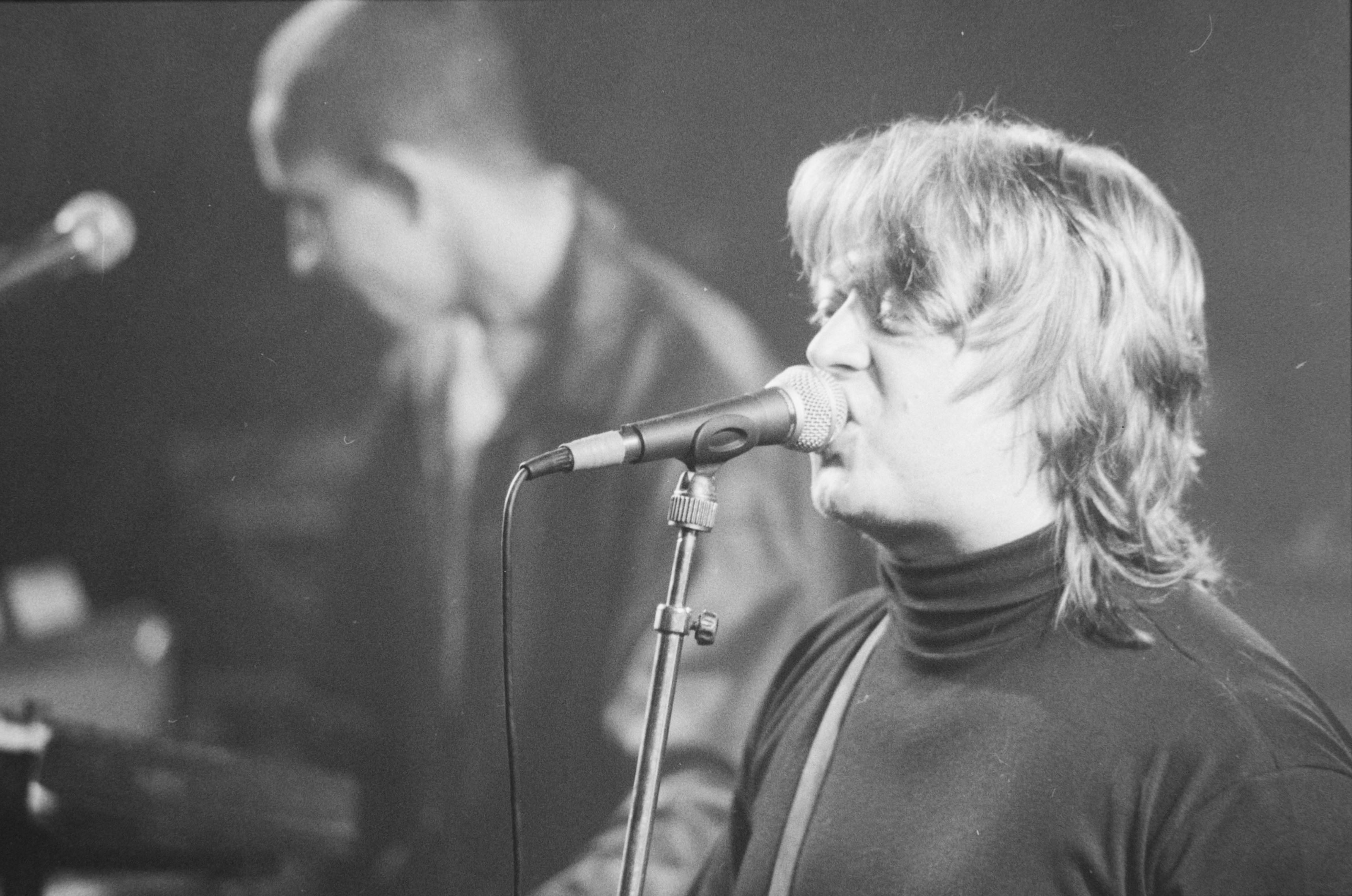
Featured photograph: Fotoburo De Boer / Noord-Hollands Archief / Wikimedia Commons, CC0. Adrian Borland with The Sound in 1987. Image may be cropped for the page layout.

